Plus-Size Summer Dress Guide: Size, Fabric & Fit
Measure bust, waist and hips, compare the exact garment chart, and check fabric, length, care and returns before choosing a plus-size summer dress online.

Quick answer: choose a plus-size summer dress by comparing your current body measurements with the chart for that exact garment, then checking its own measurements, cut, length, fabric, lining and care instructions. Do not assume that the same letter size fits across brands or that a label such as 3XL or 5XL represents the same body measurements everywhere.
Research checked: 1 November 2026. This guide explains how to evaluate a listing before ordering. GradeZO has not independently tested the garments mentioned. Product details are identified as seller-supplied where relevant.
Who this guide is for
This guide is for shoppers comparing plus-size summer dresses online, including relaxed midi and maxi styles, sleeveless dresses, A-line shapes, shirt dresses and casual day dresses. It is especially useful when a listing offers a broad size run but gives limited measurement information.
It is not a substitute for a garment-specific size chart, a fitting appointment or advice from a tailor. If a dress is for a formal event, a strict uniform requirement or a fit-critical occasion, do not rely on a generic S–5XL label alone. Ask for exact measurements and allow time for an exchange or alteration if the seller’s policy permits it.
1. Start with body measurements, not the size label
Use a soft measuring tape and record your measurements in centimetres and inches. Measure over the underwear or light base layer you expect to wear with the dress. Keep the tape level and comfortably close to the body; do not pull it tight enough to compress the area.
- Bust: measure around the fullest part of the bust, keeping the tape level across the back.
- Natural waist: measure around the narrowest point of your torso, or where your body naturally bends when you lean sideways.
- Full hip: measure around the fullest part of the hips and seat, with feet together.
- Upper arm: useful for sleeves, especially when the garment has a fitted sleeve or narrow armhole.
- Shoulder and back: helpful when the dress has a structured bodice, shoulder seams or a close-fitting upper section.
- Height and preferred hem position: note your height and where you want the hem to fall, but do not use height as a substitute for bust, waist and hip measurements.
Measure twice; if the readings differ, take a third measurement and use the two closest consistent readings. If someone helps you, stand naturally rather than holding your stomach in or lifting your shoulders. Recheck measurements after a significant body-size change rather than relying on an old chart.
2. Use the chart for the exact garment
Letter sizes are labels, not universal measurements. The European clothing-size standard EN 13402-3 describes a flexible system based on body dimensions and size-labelling information. It does not mean that every retailer uses one identical chart, and it does not turn a size label into a garment measurement. See the UNI summary of EN 13402-3 for the scope of the standard.
Look for a chart attached to the exact product page or model. A brand-wide chart may be a useful starting point, but the cut, fabric, stretch, lining and intended ease can differ between dresses. A 2XL in a relaxed shift dress may not fit like a 2XL in a fitted bodice or woven shirt dress.
Check whether the chart shows body measurements or garment measurements. Body measurements describe the person the garment is designed to fit. Garment measurements describe the finished dress. They are not interchangeable: a dress needs some ease beyond the body measurement, and the amount depends on the design and fabric.
Brand charts can use different systems even when they use similar labels. For example, Lane Bryant’s size guide publishes its own body-measurement ranges and size conversions. Use that as an example of a brand-specific chart, not as a conversion table for ZANZEA or any other label.
3. Ask for garment measurements when the chart is incomplete
If a product page only lists S, M, L, XL or 2XL–5XL, ask the seller for measurements for the size you intend to order. The most useful measurements are:
- bust width or circumference at the garment’s fullest point;
- waist width or circumference at the seam or narrowest point;
- hip width or circumference at the fullest point, where the design has a defined hip area;
- shoulder width and armhole depth;
- upper-sleeve circumference for sleeved styles;
- garment length from the stated shoulder or neckline reference to the hem;
- hem sweep or skirt circumference if you need room to walk, sit or climb stairs.
Ask how the seller measured the item. A flat width measured from side seam to side seam is usually doubled to estimate circumference, but curved seams, gathers and elastic sections make simple doubling imperfect. Ask whether the dress was measured relaxed or stretched. If the seller cannot provide a measurement, treat the fit as uncertain rather than guessing from the model photograph.
4. Decide what to do if your measurements fall between sizes
Do not automatically size up or down without considering the cut. Use this sequence:
- Identify the limiting area. For a fitted bodice, compare bust and shoulder measurements first. For a defined waist, compare waist. For a straight or narrow skirt, compare hip and hem ease.
- Check stretch and construction. A woven dress with no stated stretch generally needs more ease than a stretch knit. Do not assume stretch from a product photo.
- Compare the finished garment. If measurements are available, compare them with a similar dress you already own and like.
- Consider alteration realistically. Taking in a simple seam may be possible; changing an armhole, lining, print placement or complex bodice can be more difficult or costly.
- Ask before checkout. If the chart is unclear or two body measurements point to different sizes, request a recommendation tied to the exact model.
The best choice is the one that allows comfortable movement in the areas that matter to you. A larger size is not automatically better if it makes the shoulders or neckline fall badly; a smaller size is not better if it pulls when you sit or raise your arms.
5. Match the dress shape to the fit you want
| Dress shape | What to check | Typical trade-off |
|---|---|---|
| A-line | Bust, shoulder fit, waist seam and skirt sweep | Can give more room through the lower body, but a narrow bodice may still be restrictive. |
| Shift or straight cut | Bust, upper arm, hip and overall width | Simple and relaxed, but can feel boxy or catch at the hip if the cut is too narrow. |
| Empire waist | Bust, under-bust seam, armhole and skirt fall | Creates room below the bust, but seam placement and bust fit matter. |
| Wrap style | Bust coverage, waist tie length and overlap | Adjustable, but check that the front overlap remains secure when moving or sitting. |
| Shirt dress | Shoulder, bust, button spacing, waist and hip | Versatile, but buttons may pull across the bust or hip if there is not enough ease. |
| Maxi or midi | Actual garment length, shoulder reference and hem sweep | Length is affected by height, footwear and where the waist seam sits. |
There is no single silhouette that every shopper should choose. Prioritise the areas where you need movement and coverage. A dress that fits the bust but pulls at the hip is not a good fit; neither is one that has a comfortable skirt but restricts the armhole. Look at the whole garment rather than choosing a size to solve only one measurement.
6. Understand cotton, linen and blended fabrics
Fabric names are useful only when the fibre content is clear. Cotton is commonly chosen for its soft hand and everyday versatility. Linen is valued for its distinctive texture and airy feel, but it can crease readily. A cotton–linen blend may combine characteristics of both, but the actual result depends on the fibre percentages, yarn, weave, finish and garment construction.
Do not assume that a product titled “cotton linen” is a confirmed blend if the specification field simply says “cotton”. Ask for the fibre percentages when the distinction matters. Also check whether the fabric is lined, opaque in daylight, lightweight or heavy, and whether the description identifies a woven or stretch construction. A photo alone cannot reliably confirm fibre content, thickness or opacity.
Care instructions are model-specific. The U.S. Federal Trade Commission explains that manufacturers and importers must attach care instructions to covered textile wearing apparel under the Care Labeling Rule. The FTC also explains that most covered textile and wool products must disclose fibre content, country of origin and the identity of the manufacturer or another business responsible for marketing or handling the product. See its apparel labelling guidance. These are U.S. requirements; check the rules that apply in the market where the garment is sold.
For linen, follow the garment’s sewn-in label first. As one linen supplier’s care-guidance example, Baltic Flax advises against wringing, cautions against bleaching dyed linen, and warns that over-drying can weaken fibres and contribute to shrinkage or pilling. Those instructions are not a care label for a GradeZO product; they illustrate why buyers should read the actual garment instructions rather than applying one universal wash routine to every blend.
7. Check length, lining, pockets and practical details
Length is more than “midi” or “maxi”. Ask for the garment length in centimetres and the point from which it was measured. A dress measured from the shoulder may fall differently from one measured from the neckline or waist. If you plan to wear flat shoes, heels or sandals, compare the stated length with a dress you already own and like.
Check whether pockets are real and usable, whether the dress is lined, whether the buttons open fully, and whether the neckline or armhole needs a particular undergarment. If the dress is light-coloured or printed, look for a clear description of opacity and lining. Ask about the closure, elastic sections and any tie or belt if they affect fit.
8. Compare the total cost and return conditions
Compare more than the displayed item price. Include shipping, taxes or import charges that may apply, possible tailoring, care costs and the likelihood that you will need to exchange the size. A low-priced dress that needs extensive alteration may cost more overall than a better-fitting option with a clearer size chart.
Read the seller’s current return and exchange conditions before ordering. Check the time limit, whether unworn items must retain tags, who pays return shipping, whether sale items are excluded, and how refunds are issued. For international orders, check the delivery estimate and whether duties or local taxes are collected at checkout or on arrival. Do not assume that the return process is identical in every destination country. See GradeZO’s Returns & Exchanges information before checkout.
9. A GradeZO listing example: what to verify before ordering
GradeZO currently lists the Epic ZANZEA sleeveless plant-print midi dress in its Women’s Clothing category. The live page displays sizes S through 5XL, a sleeveless square-neck design, a button-front description and pockets. The page showed the item in stock when checked on 1 November 2026.
There are important information gaps. The product title and description call the fabric cotton linen, while the product attribute says “Cotton”. The live page lists the size labels but does not provide bust, waist, hip or finished-garment measurements. Its rating summary and review section also appear inconsistent. These issues mean the listing should not be treated as a fully verified fit or fabric recommendation. Ask the seller to confirm the exact fibre composition and measurements for the selected size before ordering. GradeZO has not independently tested or measured this garment.
When browsing a category page, open each product and check its own category, specifications, size chart and stock status. A category page is a discovery tool, not a substitute for checking the individual listing.
Buyer checklist before you add a dress to your cart
- I have recent bust, waist and hip measurements in centimetres or inches.
- I have opened the chart for the exact product, not just a generic brand chart.
- I know whether the chart refers to body measurements or garment measurements.
- I have checked shoulder, armhole, upper-arm, hip and hem measurements where relevant.
- I have confirmed the length and where it is measured from.
- I know the fibre content or have asked the seller to clarify a conflicting description.
- I have checked lining, opacity, stretch, pockets, closures and care instructions.
- I have read current return, exchange, delivery and possible import-charge conditions.
- I have not relied on a model photo or a letter size as proof of fit.
Common mistakes to avoid
- Choosing by the size label alone: S–5XL is not a universal measurement system.
- Using an old measurement: measure again if your fit has changed.
- Confusing body and garment measurements: the dress needs design-specific ease.
- Ignoring the upper body: a loose skirt does not compensate for a tight shoulder, bust or armhole.
- Assuming a fabric blend from the title: check the fibre attribute and percentages.
- Ignoring length and care: both affect whether the dress works in everyday use.
- Assuming ratings prove fit: read the actual review text and check for inconsistencies in the page.
Frequently asked questions
Should I size up if I am between two sizes?
Not automatically. Compare the measurements that matter most for the dress’s cut. If the bust or hip is close to the upper limit and the fabric has little stretch, the larger size may provide more movement, but confirm the garment measurements and intended ease first.
Is 5XL the same across every clothing brand?
No. Letter sizes vary by brand, country, garment style and intended fit. Use the exact product chart and body measurements rather than assuming a universal 5XL conversion.
What if the product page lists sizes but no measurements?
Ask for the bust, waist, hip, shoulder, armhole and length measurements for the size you want. If the seller cannot supply the details and the fit is important, treat the purchase as uncertain.
How do I measure a dress I already own?
Lay a similar dress flat without stretching it. Measure across the bust, waist and hip at the relevant seams, then double the flat widths for a rough circumference. Measure length from the same reference point used by the seller. This is a comparison aid, not a substitute for the new garment’s own chart.
Will a cotton-linen dress shrink?
It depends on the fibre percentages, weave, finishing and care instructions. Do not assume that every cotton-linen garment behaves the same way. Follow the garment label and ask whether the fabric is pre-washed or pre-shrunk if that affects the fit you need.
Is a loose-fit dress always more comfortable?
No. A loose body can still have a narrow armhole, tight shoulder, restrictive neckline or awkward length. Check the whole garment and think about sitting, reaching, walking and layering.
Final decision
The safest way to choose a plus-size summer dress online is to measure your body, compare the exact product chart, request missing garment measurements and confirm the fibre content and care instructions. Treat size labels as a starting point, not a promise. If the product page contains conflicting fields or lacks the information you need, ask for clarification before ordering. That small check can prevent an avoidable fit problem and help you choose a dress you will actually wear.
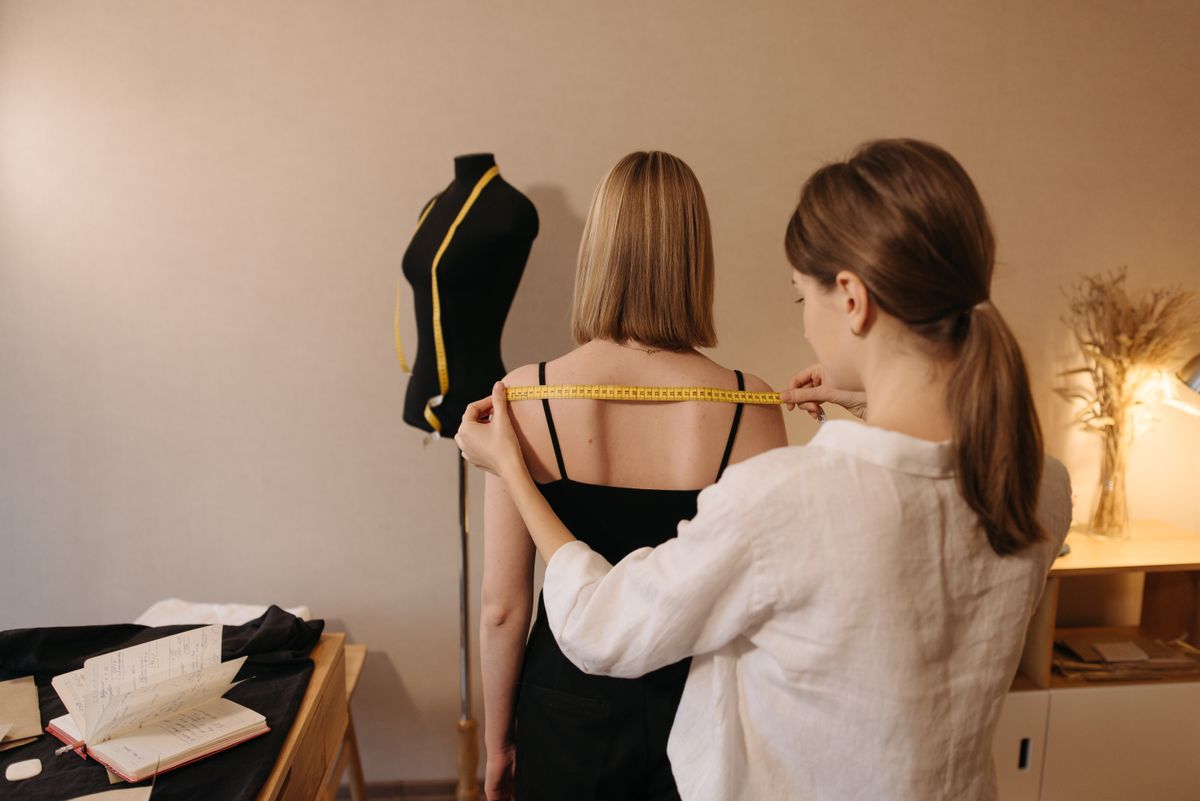
Research checked: 1 November 2026. The featured image is a rights-cleared Pexels photograph credited to Pavel Danilyuk; it illustrates garment measurement and is not a GradeZO product image.