
E-Bike Battery Safety: Charging, Storage and Replacement Checklist
Practical steps for charging, storing and checking an electric-bike battery, including CPSC advice on supervised charging and compatible chargers.

An electric bike’s battery affects how far the bicycle can travel, how it is charged and how it should be stored. Safe habits matter because lithium-ion batteries contain stored energy and can become hazardous if damaged, modified or charged with an incompatible charger.
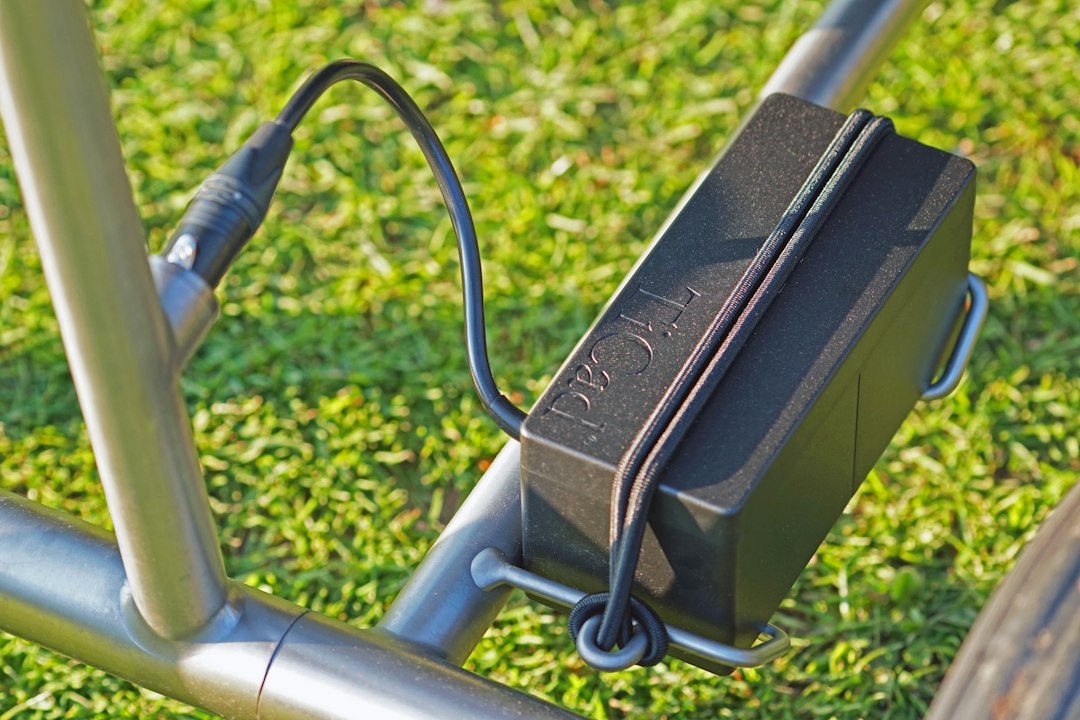
Use the correct charger for the exact battery
Use only the charger supplied with the e-bike or one the bicycle or battery manufacturer has explicitly approved for that model. A plug that physically fits is not proof of electrical compatibility. Voltage, charging profile, connector wiring and battery-management requirements must match.
The U.S. Consumer Product Safety Commission (CPSC) warns consumers not to use generic “universal” micromobility chargers unless they have been tested and approved for the specific device. An incompatible charger can create a fire hazard. Keep the charger model information and battery label so they can be checked before a replacement is purchased.
Stay with the bike while it charges
CPSC advises users to remain present while charging micromobility products and not to charge them while asleep or away from home. When charging is complete, follow the manufacturer’s instructions and unplug the device. Charge on a stable, uncluttered surface away from exits and materials that could easily catch fire. Do not cover the charger or battery while it is operating.
Follow the manual for the correct charging sequence. Some systems specify that the charger should be connected to the battery before it is connected to the outlet; others may specify a different sequence. Avoid relying on an instruction sheet for another model.
Inspect the battery, charger and cable
- Look for cracks, damaged connectors, exposed wiring or a cable that has been pinched or cut.
- Check that the battery locks securely into its mount and does not move unexpectedly.
- Keep charging ports clean and dry; do not force a connector into place.
- Do not use a battery that has been dropped heavily, crushed, punctured, flooded or modified unless the manufacturer has inspected and cleared it.
- Do not open a battery pack or replace individual cells unless the manufacturer specifies an approved service process.
Know the warning signs
Stop using and charging a battery that is swollen, unusually hot, leaking, making unusual noises or producing an unfamiliar chemical smell. If it begins smoking, hissing or burning, keep people away, leave the area and contact local emergency services. Do not pick up a smoking or burning battery, carry it through the home or attempt to dismantle it.
After an incident or suspected battery damage, contact the manufacturer or a qualified service provider. Do not put a suspect battery back on the charger just to see whether it still works.
Storage and replacement batteries
Store the battery in the conditions stated in the manufacturer’s manual. Avoid leaving it in locations exposed to extreme heat, direct sunlight, water ingress or physical impact. For long storage periods, follow the manufacturer’s advice about the recommended charge level and inspection interval; there is no single storage percentage or temperature that applies to every battery design.
Use only a replacement pack the manufacturer confirms is compatible with the exact bike model. Check the part number, voltage, connector, battery-management system, mounting dimensions and charger compatibility. A pack that fits the frame may still be electrically unsuitable.
Buying an e-bike? Check these specifications
Before ordering, confirm the battery voltage and capacity, motor’s rated power, charger model, battery warranty and availability of replacement parts. Ask whether the battery is removable and whether the pack has been tested to a recognised safety standard that applies in the market where it will be used.
GradeZO’s Electric Bikes category includes different battery and motor configurations. For example, one XIMO C91 electric mountain-bike listing states a 48V battery configuration and 1000W motor. These are seller-provided details; verify the exact battery label, charger, continuous motor rating and local road classification before buying.
Quick pre-ride and charging checklist
- Use the manufacturer-approved charger only.
- Inspect the battery case, cable and charging port.
- Charge while awake and present, following the manual.
- Keep the charging area dry, ventilated and clear of combustible clutter.
- Stop using any battery showing signs of damage or abnormal heat.
- Use only an approved replacement battery and dispose of damaged packs through an appropriate local battery or hazardous-waste programme.
Frequently asked questions
Can I leave an e-bike charging overnight?
CPSC advises users to remain present while charging and not to charge micromobility products while sleeping or away from home. Follow the battery maker’s instructions and unplug when charging is complete.
Can I use a universal e-bike charger?
Do not assume a universal charger is safe. CPSC advises against using general-purpose micromobility chargers unless they have been tested and approved for the specific device.
Can a damaged battery be repaired?
Do not open or repair a lithium-ion pack yourself. Ask the manufacturer or an authorised specialist to assess it. A damaged battery may need to be removed from service and handled through a suitable disposal route.
Sources and further reading
- U.S. CPSC: Micromobility Information and Safety Centre
- U.S. CPSC: Warning about universal chargers for micromobility products
Safety guidance is general information, not a substitute for the instructions supplied with a specific e-bike or battery. Local product-safety and waste-disposal rules may differ.